
HOME / SCIENCE / Strategy
Strategy
Strategy

Since 2016, cancer is the second most common cause of death, accounting for just over a quarter of all deaths worldwide. Despite of tremendous amount of effort to understand cancer and to fight against it, cancer is remaining as a formidable and devastating disease of our time. In order to give hope to cancer patients and their families, we are committed to develop innovative small molecule and Targeted protein degradation(TPD) anti-cancer medicine.
Txinno Bioscience is developing anti-cancer treatments focused on two intertwined aspects of physiology of tumor tissue.
The first one is defined as tumor-extrinsic factors which are various signaling pathways operating in stromal cells other than tumor cells and promoting cancer cells to survive. Corresponding assets are ENPP1 inhibitor, “Target L” inhibitor and ”Target Z” inhibitor controlling tumor microenvironment
The other one is defined as tumor-intrinsic factors which are either genes or signaling pathways of tumor cells to directly control tumor cell proliferation or survival. Corresponding assets are ULK1 payload, ULK1 PROTAC , ”Target W” PROTAC and “Target A” MGD targeting cancer vulnerability.
Global Pharmaceutical Demand and Tumor Complexity and Expanding Modalities in Immune therapy / targeted therapies
-
Addressing Global Pharma Demand: Focusing strategically on developing therapies that modulate the Tumor Microenvironment (TME) and targeted oncology drugs for cancer vulnerabilities, while considering unmet medical needs.
-
Reflecting Tumor Complexity: Categorizing complex tumor factors into intrinsic and extrinsic factors to identify promising targets for each.
-
Expanding into New Modalities: Expanding the range of novel targets, Addressing emerging trends in anticancer therapeutics: Evolving from Small Molecules to PROTAC / ADC Payloads, and further to Targeted Molecular Glue Degraders.

Modulation of tumor microenvironment (TME)
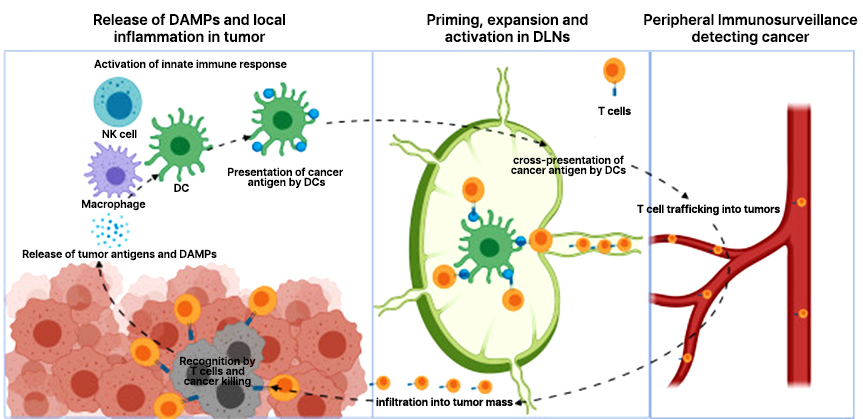
Delivery Strategies and Engineering Technologies in Cancer Immunotherapy 2022, P19-61
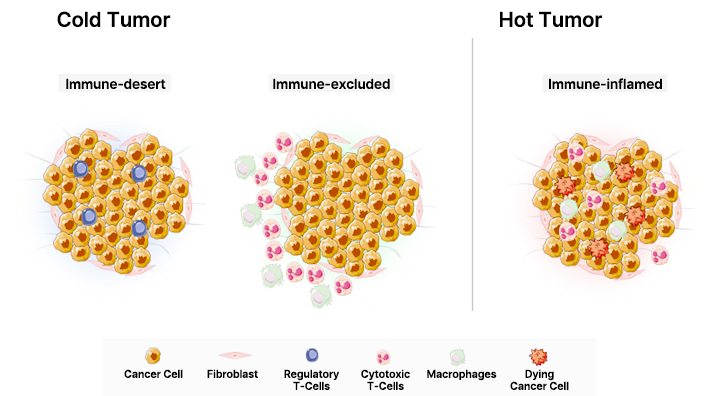
Front. Gastroenterol., 20 September 2022
Cancer immunotherapy is a strategy that activates the patient’s immune system to recognize and eliminate cancer cells, strengthening the body’s own defense mechanisms rather than directly attacking the tumor. NK cells, dendritic cells (DCs), macrophages, and cytotoxic T cells work together to remove tumors, and this process is heavily influenced by the tumor microenvironment (TME).
TME-modulating immunotherapies maximize immune activation by enhancing T-cell and NK-cell activity, inducing macrophage repolarization, improving antigen presentation, and reducing immunosuppressive cells—thereby converting an immunosuppressive TME into an immune-stimulatory one.
Txinno Bioscience is developing a first-in-class ENPP1 inhibitor and a “target Z” inhibitor as treatments that modulate the tumor microenvironment based on these concepts, as well as a best-in-class “target L” inhibitor.